How to Help a Struggling Reader: Best Tips for Homeschoolers

If you have a struggling reader, I want to give you a big virtual hug. Teaching a struggling reader can try every bit of a homeschool mom’s patience. Luckily, I have some tips on how to help a struggling reader. Reading is essential, and knowing how to help a struggling reader can make a huge difference.
After you have accepted my virtual hug, let me share my daughter’s journey in learning to read.
This post contains affiliate links.
Teaching Reading: A Mom’s First Mission in Homeschooling
When you started homeschooling, did you feel like teaching reading was your first mission? I know that I did. When my oldest child was five, I launched into homeschooling and we began the process of learning to read.
I was shocked at how difficult it was for both of us!
I thought that I was a patient mom, and I thought I would be a patient teacher.
Teaching reading caused tears for both him and I, and it took a lot of growing up to do (on my part) to be the kind of teacher I envisioned for my boys.
Teaching Reading is Personal
Teaching reading to my first son (and second, third, and fourth son, too) taught me about many of my strengths and weaknesses.
Here are the qualities I wish to have as a homeschool mom and teacher to my children:
- I want to be patient.
- I want to be encouraging.
- I want to create a positive learning environment.
- I want to be fully attentive to my kids when they are learning new or challenging things.
Here is the reality:
- Sometimes I am tired.
- Sometimes I am cranky.
- Sometimes I am distracted.
- Sometimes the positive learning environment is difficult to achieve in our busy household.
Reality should not make you despair.
We can rise above the reality and still be a great mom and teacher to our children, even if they are struggling to read or learn other new things.
The key is to just keep showing up. Keep teaching. Keep loving your kids and loving yourself. Keep being thankful for the opportunity to teach your children, even your struggling reader.
You can do this, even in the midst of tiredness or crankiness or all the other imperfections of the human condition.
My Struggling Reader’s Journey
My daughter is in 2nd grade this year and is a struggling reader. It has been a long journey, but we are feeling encouraged, and I feel like I have found the ways to help a struggling reader.
Remember that in homeschool, there is no “behind.” Of course, I would love her to be reading easily and independently, but she is not, and that is okay. I fully believe that we will get there soon!
Reading in Kindergarten
Usually, I start reading instruction when my kids are five years old. Five of my kids have been ready at this age to start reading easy books and complete a reading homeschool curriculum.
In Kindergarten my daughter was not ready to read. After a couple of months of trying some beginning reading, we stopped formal lessons. We worked on letter sounds and handwriting. I read her stories, and she played a lot.
It was not time for her to learn to read.
Reading in First Grade
In first grade, we went through the Memoria Press First Start Reading Program. This worked so well for my older boys. But at the end of the year, we had made progress, but it was still a huge challenge.
Having a struggling reader can be really discouraging! I felt like I was failing, I felt like she was sad, and I felt irritated and frustrated with the process.
I also began to think that she was probably dyslexic. Sometimes my kids do things later than others and it is just developmental. I was really hoping that my daughter just wasn’t developmentally ready to read yet, and that was the reason that it was taking so long.
I wasn’t sure if I wanted to have a real diagnosis or lifelong issue to navigate. I didn’t feel equipped for that challenge. It was really scary for me.
Is Your Struggling Reader Dyslexic?
It’s essential to identify the signs that indicate how to help a struggling reader, as early intervention can be beneficial.
If you are wondering if your struggling reader is dyslexic, here are a few simple tests you can give them. My daughter struggles with all of these things.
Simple Dyslexia Screening for Kids
(For children 6 and older)
1. Letter and Word Recognition
- Ask your child to recite the alphabet. Do they skip letters or mix up the sequence?
- Show them common sight words (like was, what, said, they). Do they struggle to recognize or sound them out?
2. Phonemic Awareness (Sound Manipulation)
- Say a simple word (like cat) and ask your child to change the first sound (e.g., “What word do you get if you change c to b?” → bat).
- Ask them to say “dog” without the ‘d’ sound. (Answer: og)
- Can they rhyme words easily? (e.g., “What rhymes with fun?”)
3. Reading and Spelling Challenges
- Ask them to read a short, age-appropriate passage. Do they guess words instead of sounding them out? Do they reverse letters (b/d, p/q) or struggle to track words on the page?
- Give them a few simple words to spell. Do they mix up letter order (saw → was) or struggle with phonetic spelling?
4. Memory and Processing Speed
- Say a short sequence of numbers and ask them to repeat it back in order. (Example: “4-7-2”)
- Tell them three simple instructions (“Touch your nose, clap, and spin around”). Do they struggle to remember all steps?
Interpreting the Results
If your child consistently struggles with multiple sections above, it might be worth seeking an evaluation from a professional, such as an educational psychologist or a dyslexia specialist. Many children have some reading struggles, but persistent difficulties with phonemic awareness, decoding, and memory are key indicators of dyslexia
A Dyslexia Diagnosis for Your Struggling Reader
If you think your child has dyslexia, don’t be fearful like I was. There are so many resources and helps available these days. One website that helped me a lot was Homeschooling With Dyslexia | Language Based Learning. You might check it out and be encouraged!
There are also many curriculum providers that cater especially to helping children with dyslexia. Keep reading to find out what resources are helping my daughter.
How to Help a Struggling Reader in Second Grade
By second grade, I had a plan. I considered these truths:
- I knew my daughter was dyslexic.
- I knew I wanted to help her learn to read.
- I believed that I COULD help her learn to read.
- I resolved each day to be patient and loving.
- I accepted that this was going to be a long journey.
Language Arts Resources to Help a Struggling Reader
These are some of the reading resources that we used to get in a lot of reading practice without tears or frustration.
The Ordinary Parent’s Guide to Teaching Reading
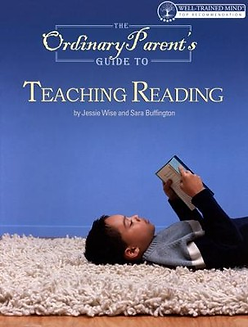
Our main spine is The Ordinary Parent’s Guide to Teaching Reading. I love this curriculum and think it should be on every homeschool mom’s shelves.
It is a phonics-based reading program and is exactly the way I want to teach reading: my daughter and I, curled on the couch with a book.
We can go as fast or as slow as we need to go, and we can easily go back a couple of lessons for review if it starts to be too challenging. I highly recommend The Ordinary Parents Guide to Teaching Reading!
We can do this book together for about 15 minutes, which is a perfect amount of intensive reading instruction for a 7-year-old. It will take 1-2 years to complete this book.
By focusing on her strengths, I can see the ways that I can help a struggling reader become more confident and engaged.
I also used this curriculum for my other children who were not struggling readers. My two oldest boys did not need to finish it, about 3/4 way through they were fabulous readers!
All About Spelling
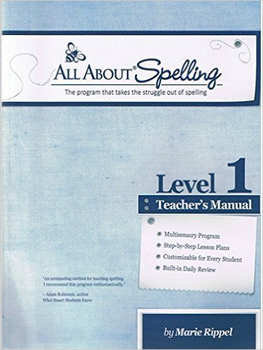
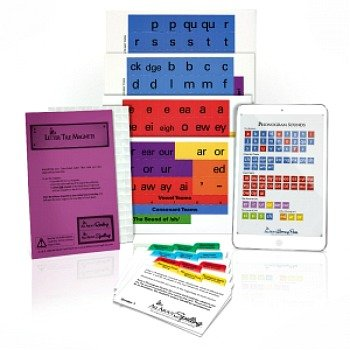
Next, we use All About Spelling, Level 1 and the All About Spelling Basic Interactive Kit. This is wonderful for teaching letter sounds. The Interactive Kit enforces the concepts in different ways – flashcards, letter tiles, work on a white board and on paper.
My daughter is definitely a tactile learner and needs to use her whole body while learning. We aim to spend about 10-15 minutes on All About Spelling. She is progressing quickly, and I think we might get through Book 1 and 2 this year.
Memoria Press First Start Reading Flashcards
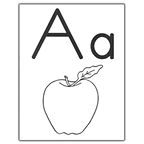
I love Memoria Press’s materials and think that their First Start Reading Program is excellent for most kindergarten students. It just moves a little too fast for dyslexic and struggling readers.
However, I still use their Phonics and Sight Word Flashcards every day with my daughter. They are helping her recognize sight words much more easily, which is leading to more reading success.
This takes about five minutes per day. She can also practice these with an older sibling, which is helpful when I am very busy with my other children.
Reading Apps to Help a Struggling Reader
Reading Eggs, Hooked on Phonics, and Readability are all popular reading apps designed to help children develop literacy skills, but they each have unique approaches.
Every afternoon, I allow my daughter to have some screen time on these reading apps. She doesn’t play any other video games, so this is very fun for her.
Reading Eggs is an interactive, game-based program that teaches phonics, sight words, and comprehension through engaging activities, songs, and rewards. It’s ideal for younger learners and struggling readers because it makes learning feel like play. With adaptive lessons and a placement test, Reading Eggs customizes the experience to match each child’s skill level.

“>Hooked on Phonics, on the other hand, follows a more traditional, structured approach based on phonics instruction. The app breaks reading down into step-by-step lessons that combine video animations, interactive games, and practice reading sessions. Unlike Reading Eggs, which has a strong gamified element, Hooked on Phonics focuses on direct phonics instruction and reinforcement through physical books and workbooks, making it a good fit for parents who want a blend of digital and hands-on learning.
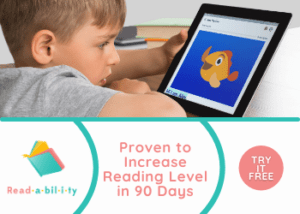
Readability sets itself apart by focusing heavily on reading fluency and comprehension through AI-powered listening and feedback. Unlike the other two apps, which emphasize phonics and early reading skills, Readability listens to children as they read aloud, providing real-time feedback on pronunciation and fluency. It also includes comprehension questions to ensure understanding. This makes Readability especially useful for older emerging readers who need extra support in developing confidence and accuracy when reading independently.
Read my review of the app here: Readability App Review: A Game-Changer for Young Readers
Bob Books
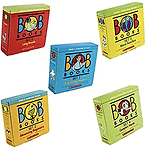
I think Bob Books are excellent for learning how to read. My daughter is reading one Bob Book to her dad before bedtime each night. Since the Bob Books start with very simple reading, it is easy and possible for a struggling reader to experience success! This is so important when building confidence.
I also like Bob Books for their simple illustrations and funny, quirky stories. Kids love them!
Tips to Help a Struggling Reader
Overall, this adds up to more than an hour a day of reading instruction. Since learning takes many different forms, she does not get tired out or upset. I think this dynamic way of learning is great with any subject.
My daughter doesn’t know she is behind in reading, compared to other second graders. She just knows that reading is our main goal this year and we celebrate success as she becomes more and more fluent.
I hope this helps you to formulate a reading plan with your child, especially if you are making a plan on how to help a struggling reader in your family.
Teaching our kiddos to read is a wonderful blessing. It is not easy, but your patience and perseverance will pay off in the end!
In our homeschooling journey, we can continuously learn new ways on how to help a struggling reader.
For more tips on how to help a struggling reader, feel free to explore additional resources on my blog.
How to Teach Reading in Homeschool: Best Resources
Readability App Review: A Game-Changer for Young Readers
A Growth Mindset: 7 Ways to Help a Late Reader
Homeschool Planning: 4 Important Reasons to Start NOW
Tips for Homeschool Success: 26 Proven Strategies
Happy Homeschooling!